Just to be clear, the lack of traditional office space isn’t just for small companies…The firm with 900 staff and no office. Count me in for the team meet-up in Thailand. #nocommute
Cool Office Space or Unnecessary Overhead?
So I saw this tweet from @mindshare this morning:
Now don’t get me wrong, the office space looks spectacular. I mean look at the views. Look at the cool space for town hall meetings. That’s a lot different than what you see at Northampton Consulting each morning. [Truth be told, my space looks the same in the afternoon as well.] Am I at least a little bit jealous? Nope.
I have been lucky enough to work in some very cool workspaces in my career. 600 Battery, San Francisco. 27 Maiden Lane, San Francisco. 777 Third Avenue, New York. 318 Blackwell, Durham. Amongst others.
They all screamed creativity (well, 777 Third Ave. not so much but that was a long time ago). They were designed to make collaboration happen without anyone actually knowing they were collaborating. Lots of big, shiny conference rooms to impress not only current clients but key prospects as well. They were spiritual incubators for the ever-elusive big idea.
And because every one of these agencies spent piles of f*@king money building these spaces out, they had to show them (off) to everyone they could. The birth of the agency tour. Forget a visit to the Met, or the Guggenheim or the San Francisco Museum of Modern Art. Come tour the ad agency. “Let us tell you about how the conference rooms were named (each one is a little known Anime character, cool huh?)” They’ll tell you about the time they blew through that wall, “the one right there”, as the current space simply wasn’t keeping pace with the agency’s meteoric growth. And while you might not catch it, there’ll be inside jokes sprinkled throughout the tour, clearly indicated by the little smirks of the well-meaning agency folks giving you the tour.
I have to ask though, who really benefits from the space? It’s certainly not the client/prospect. Sure, they get to go to the agency and sit in a badass conference room sipping Pellegrino as they review the latest concepts for Brand X Energy Drink (not competitive with Pellegrino, not at all). All good until they realize just how much that Pellegrino cost their company. Is it the agency employees? Sure, I guess, a little. But I’d wager that most employees (i.e., the ones not giving the agency tour) don’t really give a shit where they work (right Starbucks?). Or maybe they do when they realize they could be making a lot more money if the agency refocused their attention on them and not the state-of-the-art virtual reality experience in the main conference room, aptly named Haruhi FujiokaI.
It’s pretty clear that companies like WeWork or the Union Member House in Durham understand the need for alternatives to the traditional office space.
So if you want to spend a lot of money on bricks and glass and cool views, go right ahead. I’d prefer to invest those same dollars on my employees. Making sure they understand that my priority is on them and the work they do for our clients.
Arghh, gotta run. I have a call I have to get on from the comfort of my home office which has no bricks, limited glass and a partial view of the Smith’s house next door.
Good Leadership Requires a Healthy Ego
I came across a great article this morning from HBR entitled: “Ego Is the Enemy of Good Leadership“. It’s a quick read and definitely worth your time. Kudos to the authors, Rasmus Hougaard and Jacqueline Carter for their insightful take.

If you’ve spent enough time on the planet, chances are you’ve encountered someone in a leadership role that’s fallen victim to the ego. And it can be an ugly encounter.
“An unchecked ego can warp our perspective or twist our values. In the words of Jennifer Woo, CEO and chair of The Lane Crawford Joyce Group, Asia’s largest luxury retailer, “Managing our ego’s craving for fortune, fame, and influence is the prime responsibility of any leader.” When we’re caught in the grip of the ego’s craving for more power, we lose control. Ego makes us susceptible to manipulation; it narrows our field of vision; and it corrupts our behavior, often causing us to act against our values.”
Of course, that assumes those values even existed in the first place.
Note: image courtesy of HBR.
Head. In. The. Sand. Part Deux
I am certainly not going to jump on the “bash everything that happened – or didn’t happen – at Cannes this year” bandwagon. That would be way too easy, especially if you simply plagiarize someone else’s words (think you know what I’m sayin’ @sureshdinakaran.)

That said, Pam Erlichman, CMO at Jebbit, wrote a great piece in MediaPost recently entitled: “What I DIDN’T Hear At Cannes: No Talk Of Correcting Data Missteps“.
Her overall position: “It’s time to shift focus off big data that goes nowhere to small, actionable data that drives lifetime value and deeper relationships with consumers. It’s time to put data collection and usage practices in place that are transparent and build brand trust with consumers. And finally, it’s time to provide real value to consumers in exchange for that data.” [My emphasis, not hers].
I hope the industry takes some tangible action before the many prognostications of the imminent death of everything we know come true.
Note: image courtesy of SmartCitiesWorld.
Head. In. The. Sand
Carole Cadwalladr: the ad industry is ignoring Cambridge Analytica fallout.
“In terms of responsibility, there’s something really key about Cannes Lions and the ad industry’s involvement in this,” she explained. “This is where the money is coming from. It is kind of depressing that there’s not a single talk happening in this entire week [about data misuse] with money swishing down through the streets.”
Hope you had fun in Cannes people.
To Burn Your Ace or Not to Burn Your Ace, That is the Question
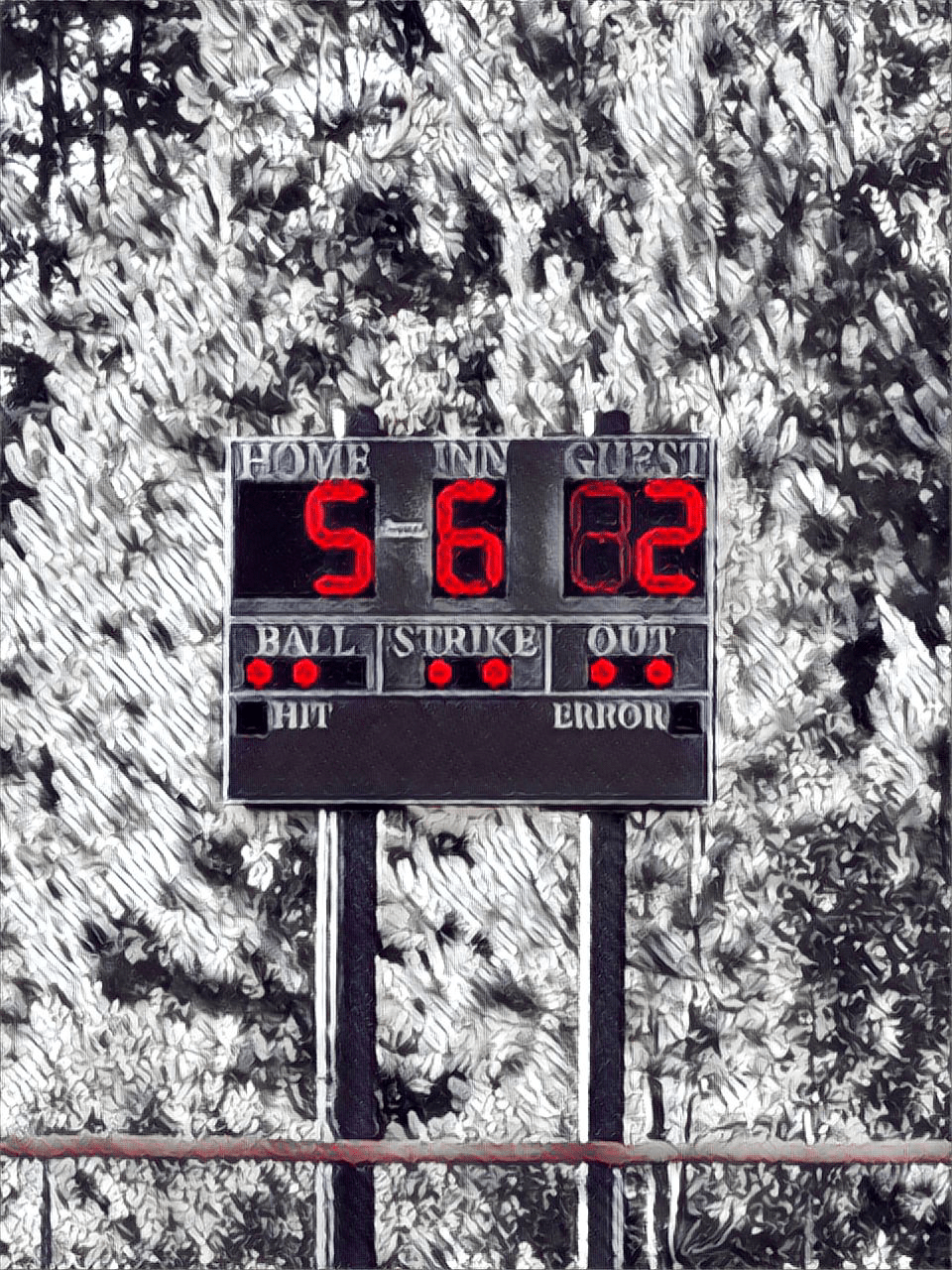

For those that know me well, you already know that a good chunk of my free time is spent on a ballfield with my sons. While it’s been said plenty of times already, the parallels between life (and work) and baseball are all over the place. One such parallel is how you manage your bullpen.
First, let me give you a little context. This was my boys’ last year of Little League. I have either been a hyper-involved dad or a uniformed coach for them since they started playing t-ball. This last season I managed their Majors team. The team started off a little slowly, winning only two of our first eight games. But then things took a turn for the better: we won our next five games putting us into the playoffs as the #3 seed (out of 5 teams). We won our first two playoff games which got us into the division championship. We also won that game. Winning the division championship game got us into the Mayor’s Cup, a long-standing rivalry between South Durham Little League and our bitter rival to the North: Bull City Little League. And guess what? We won that game as well. Nine straight wins for those of you still reading this piece. All in all, 11 wins, 6 losses. Not a bad season.
So what’s my point? There are plenty of reasons why our season turned around. Our hitting improved. Our defense improved. The contributions made by the bottom of our batting order ramped up significantly. And one can never underestimate the power that positive momentum has on a team (or an individual for that matter).
But I think the most important reason for our success was the way that we managed our pitching staff towards the end of the regular season and into the playoffs. We tried to keep all of our regular pitchers available for the next game (1) by limiting the number of pitches they threw (which also helped keep our pitcher’s arm’s healthy). Some teams opted to be more aggressive and burn their best pitchers to secure the immediate win. So we went into the next game with all of our pitchers, the other guys went in without their best pitcher(s) and had to rely on #2, #3, etc. We took the conservative approach and it did us well in the long-term.
So I guess the real question that I’m asking is whether you put everything on the table today and worry about the repercussions tomorrow? A true win or go home mentality. Or do you plan a bit more thoughtfully, a little more conservatively so you have more choices in terms of how you manage the next “game”?
I’d love to hear your thoughts.
(1) The eligibility of a player to pitch in a Little League® Baseball game is governed by a tiered pitch count that is tied to the number of pitches thrown in a game. The pitch count determines how many days of rest are required before said player may pitch again in a Little League game. For example, if a player pitches 36-50 pitches in a day, two (2) calendar days of rest must be observed. If a player pitches 21-35 pitches in a day, one (1) calendar days of rest must be observed. If a player pitches 1-20 pitches in a day, no (0) calendar day of rest is required. There are also a maximum number of pitches a player may throw based on their league age.
Nope, This Isn’t Weird
“So yes, our phones are listening to us and anything we say around our phones could potentially be used against us.”
Your Phone Is Listening and it’s Not Paranoia.
Why Consumer’s Increasing Demand for Online Privacy is Good for Our Business
I have always argued that our industry didn’t do enough, early enough to get ahead of consumer privacy. I wrote a post in February 2014 (seems like forever ago) where I stated in no uncertain terms: “If we continue to keep our collective heads buried in the sand on this issue, we can say goodbye to one of the only remaining benefits of online ads: highly precise targeting.”
Fast forward to today. We’ve lost control of the narrative and let others like the European Union lawmakers and their well-intentioned General Data Protection Regulation (GDPR) take control. We should have been clear that: 1) creating high-quality content is not cheap, and 2) as a result, consumers should be willing to pay for this content either in the form of paid subscriptions and/or personal (but not personally identifiable) data. But we didn’t.
We continued to create digital campaigns that were increasingly reliant on consumer data. If you weren’t harnessing the so-called power of big data you were considered a digital neophyte. Now we see that “power” rapidly diminishing as increasing privacy regulations become the norm enabling consumers to take more and more control of their online information. According to some in the AdTech/MarTech space (i.e., the ones whose business models are predicated on the use of data), this signals the death of (digital) marketing as we know it. Bullshit.
Data doesn’t drive successful campaigns. Ideas drive successful campaigns.
There was a piece in AdWeek recently written by Fernando Machado, CMO of Burger King entitled “The Inside Story of the Burger King Campaign that Changed the Brand’s Entire Outlook on Marketing.” If you haven’t read it, I’d strongly encourage you to do so. In the article, Mr. Machado posits that: “To make people care, you need a big idea. An idea that plays with people’s imagination, an idea that is fun and connects people to the brand. He goes on to talk about a “future where creativity is only used for (and celebrated for) responding to real, tangible business and brand goals.” In his almost 2,000 word article, he didn’t use the word data once.
To be clear, I am not saying that data cannot be used to make great ideas come to life – it should, while we still have the capability to do so – but we as a creative industry cannot continue to rely on data to compensate for mediocre ideas.
I’d love to hear what you think.
We Better Pay Attention Peeps
According to December 2013 research conducted by Harris Interactive cited today by eMarketer, “more than nine in 10 internet users worry about online privacy. Further, 74% of respondents said they were more concerned about their privacy than they had been a year earlier—a number that was also up since 2013.”
And there’s more: “These concerns made 83% of internet users less likely to click on online ads, 80% to avoid using apps they didn’t trust with their personal information and 74% to keep location tracking turned off on their smartphones.”
If we continue to keep our collective heads buried in the sand on this issue we can say goodbye to one of the only remaining benefits of online ads: highly precise targeting.
These concerns made 83% of internet users less likely to click on online ads, 80% to avoid using apps they didn’t trust with their personal information and 74% to keep location tracking turned off on their smartphones.
Read more at http://www.emarketer.com/Article/More-Than-Nine-10-Internet-Users-Worry-About-Online-Privacy/1010587#SWYB8BXz8eDlsGhz.99
Read more at http://www.emarketer.com/Article/More-Than-Nine-10-Internet-Users-Worry-About-Online-Privacy/1010587#SWYB8BXz8eDlsGhz.99
These concerns made 83% of internet users less likely to click on online ads, 80% to avoid using apps they didn’t trust with their personal information and 74% to keep location tracking turned off on their smartphones.
Read more at http://www.emarketer.com/Article/More-Than-Nine-10-Internet-Users-Worry-About-Online-Privacy/1010587#SWYB8BXz8eDlsGhz.99
Read more at http://www.emarketer.com/Article/More-Than-Nine-10-Internet-Users-Worry-About-Online-Privacy/1010587#SWYB8BXz8eDlsGhz.99
What Happens If You Share Questionable Moves by Facebook on Facebook?
I sent a tweet last week re: a Fast Company article which brought to light some peculiar permission requests when Facebook users tried to update their app. My Twitter account is linked to my Facebook account.

Follow the link on Facebook and…

You may not like Fast Company but “malicious?” Not so much.
Is this a case of Facebook limiting what users are “allowed” to share or something a little more innocuous? Love to hear your thoughts…assuming you’re able to read this post.
 Northampton Consulting